

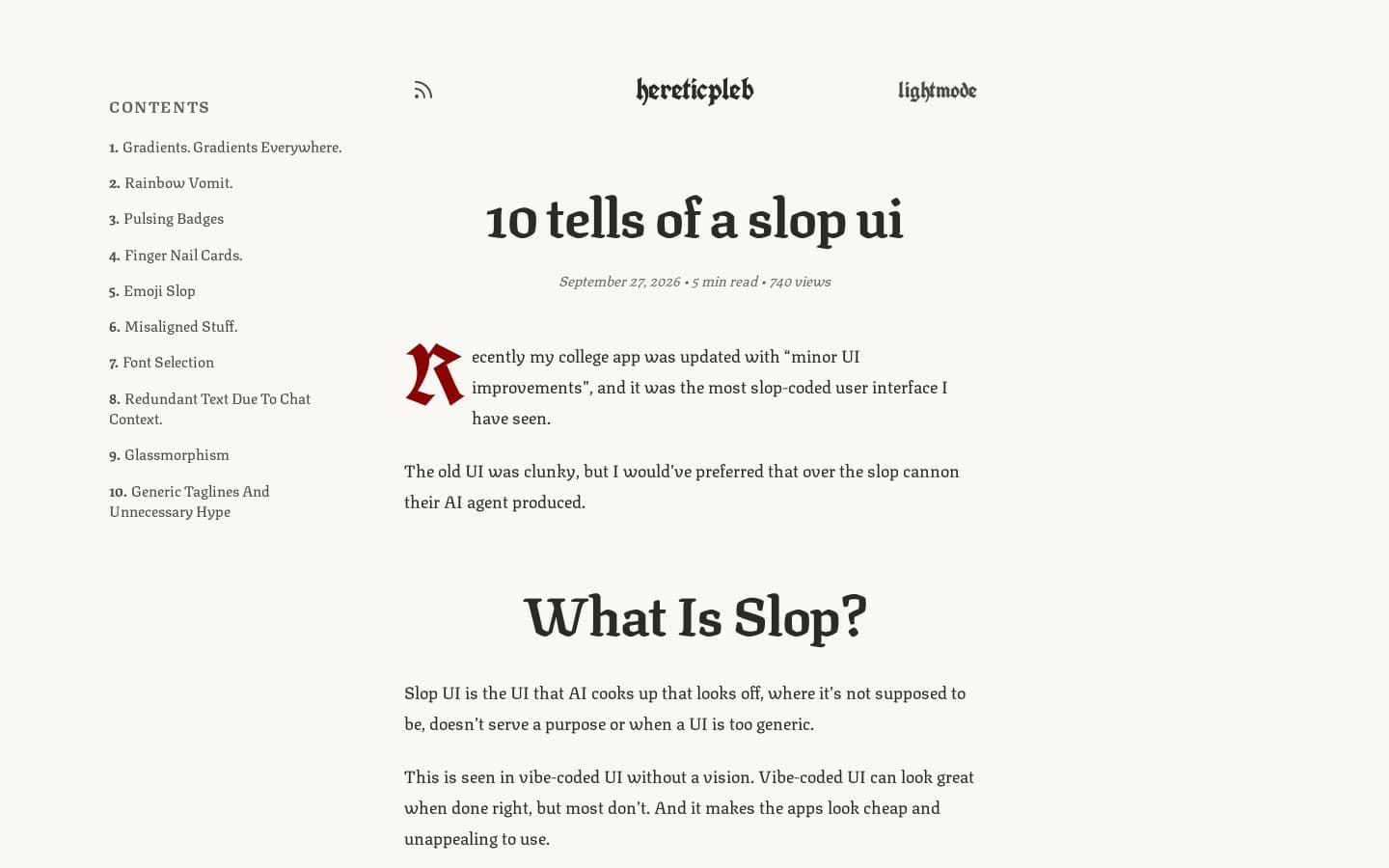
10 tells of a slop ui
AI agents produce slop when not restricted. Here are 10 things to watch out for
UX Designers, UI Designers, Product Designers, and Web Developers
AI agents produce slop when not restricted. Here are 10 things to watch out for
Skills for Design Engineers. Contribute to emilkowalski/skills development by creating an account on GitHub.

An AI skill that provides design intelligence for building professional UI/UX across multiple platforms. - nextlevelbuilder/ui-ux-pro-max-skill