A curated collection of noteworthy tools, articles, and resources from across the web — searchable, organized, and enriched with AI analysis.
Showing 889-912 of 1253 bookmarks
All Stories
Modern Java web application starter template. Contribute to ChangeNode/spring-boot-supabase development by creating an account on GitHub.
Strix Halo HomeLab·Welcome to the Strix Halo HomeLab wiki! The purpose of this website is to gather all important information related to systems with AMD Ryzen AI MAX and MAX+ in home lab applications, so most of the guides are very Linux-centric, but…
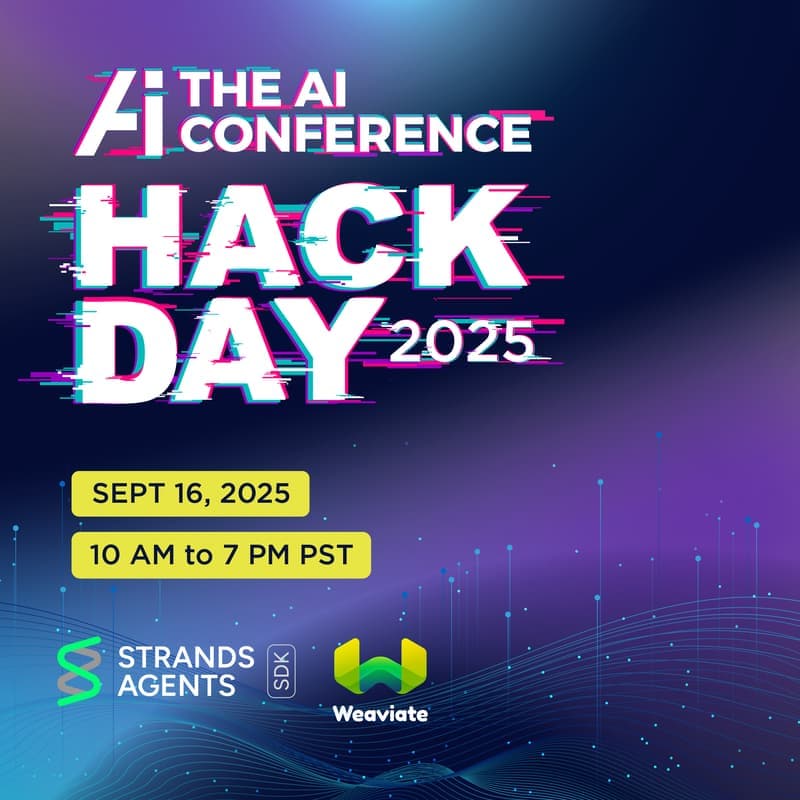
Community, events, and resources for developers.
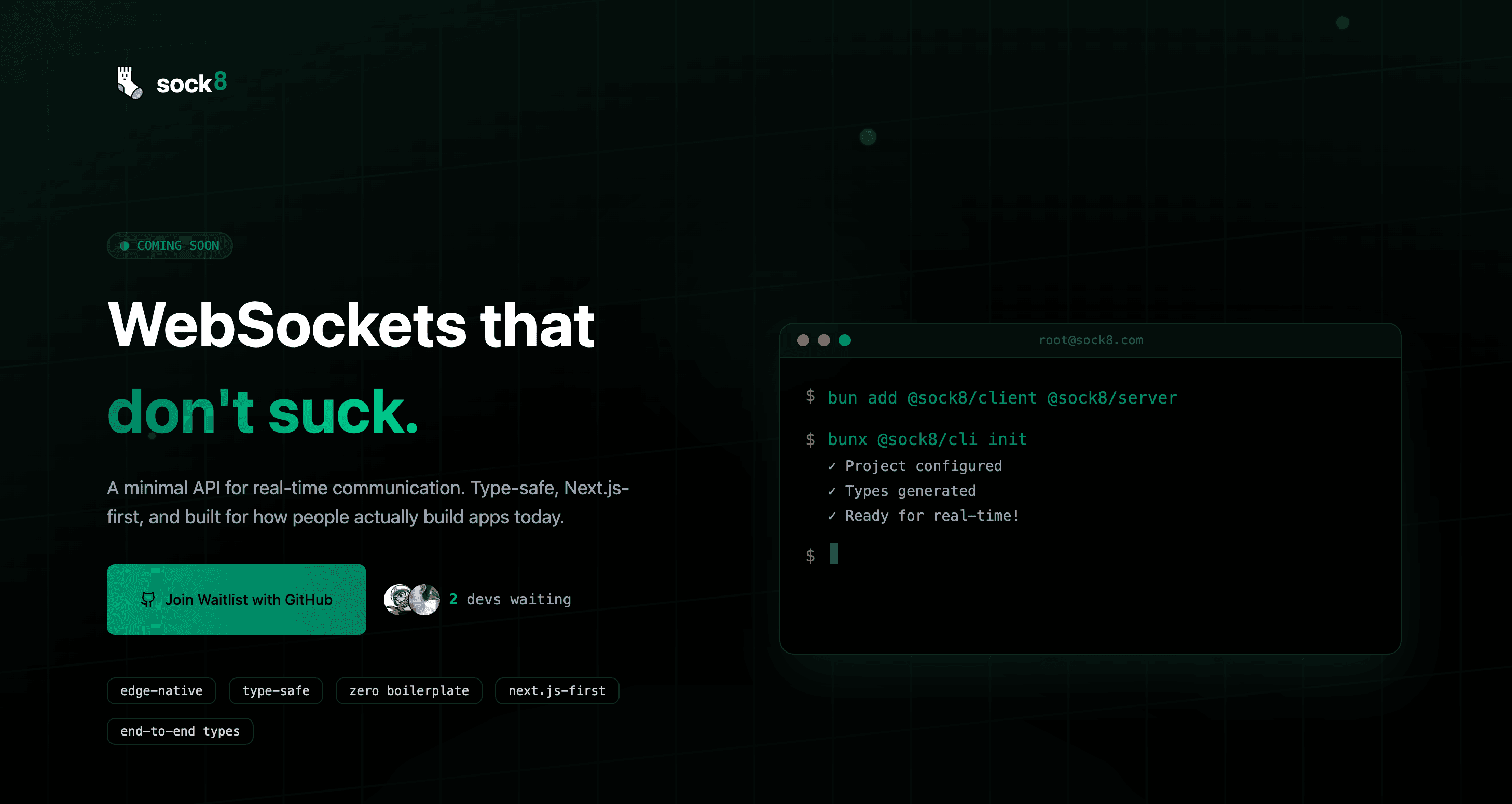
End-to-end type-safe realtime platform for the Next.js ecosystem.
Unlimited SQLite DBs Directly In Your Worker - OSS Turso Alternative - janwilmake/dorm
Stop context switching. Factory integrates code, documentation, and discussions in one intelligent workspace.
This is a demo of an end-to-end coding platform where the user can enter text prompts, and the agent will create a full stack application. It uses Vercel’s AI Cloud services like Sandbox for secure code execution, AI Gateway for GPT-5 and other models support, Fluid Compute for efficient rendering and streaming, and it’s built with Next.js and the AI SDK.
Open-source framework for building multi-agent systems with memory, knowledge and reasoning. - agno-agi/agno
Embedding sizes and architectures have changed remarkably over the past 5 years
BrowserOS is an open-source agentic web browser. Contribute to browseros-ai/BrowserOS development by creating an account on GitHub.
Qdrant is an Open-Source Vector Database and Vector Search Engine written in Rust. It provides fast and scalable vector similarity search service with convenient API.
Introducing BM42 - a new sparse embedding approach, which combines the benefits of exact keyword search with the intelligence of transformers.
Anthropic is an AI safety and research company that’s working to build reliable, interpretable, and steerable AI systems.
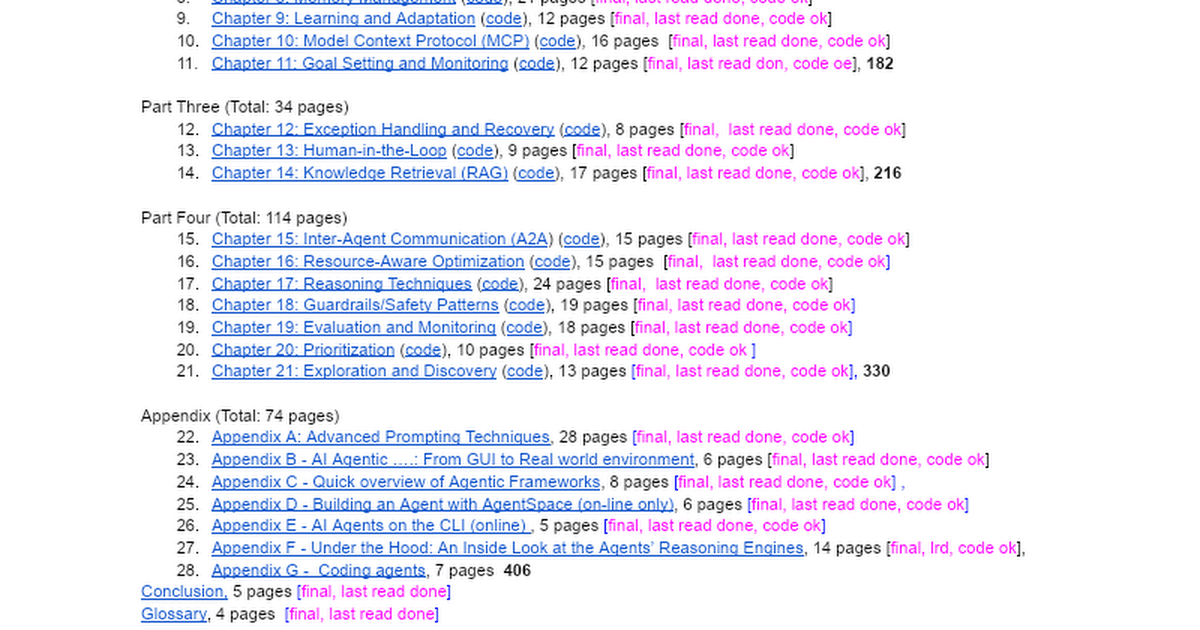
Agentic Design Patterns is a 424-page practical guide by Antonio Gulli focused on implementing intelligent AI agents and their design patterns. The book covers core AI agent topics such as prompt chaining, multi-agent collaboration, memory management, exception handling, reasoning, safety guardrails, and real-world deployment. It includes extensive code examples, advanced techniques, and appendices detailing frameworks and implementation tools.
A deep dive into the convoluted and fascinating story of one of the most important keys on the keyboard
Interactive find-and-replace in the terminal. Contribute to thomasschafer/scooter development by creating an account on GitHub.
A deep-dive into the challenges and misconceptions surrounding async programming in Python
Join the maxly.chat waitlist for early access.
If you are a beginner like me, you may find those container based solutions helpful. If you are on Fedora42, just follow the explanations on his GitHub and ROCm support should work on your Framework Desktop at least for the text based models. I am currently trying out his container for image/video creation. I did have issues on openSUSE, probably something related to the container support.
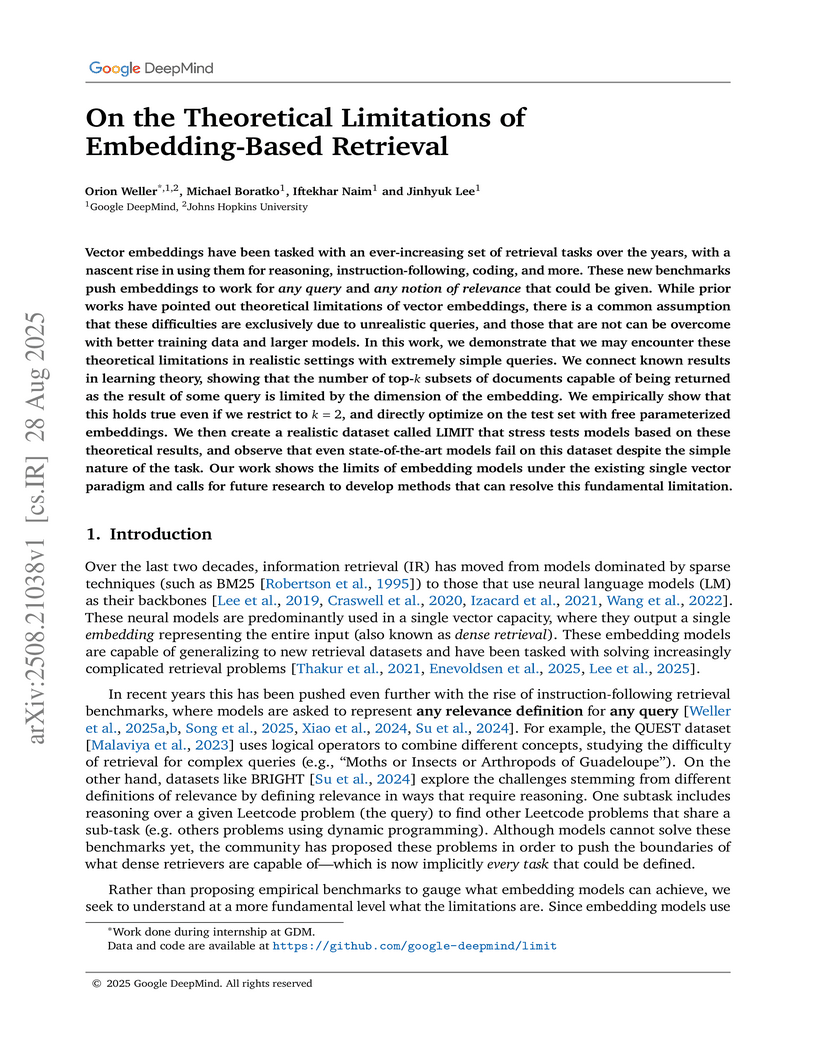
View recent discussion. Abstract: Vector embeddings have been tasked with an ever-increasing set of retrieval tasks over the years, with a nascent rise in using them for reasoning, instruction-following, coding, and more. These new benchmarks push embeddings to work for any query and any notion of relevance that could be given. While prior works have pointed out theoretical limitations of vector embeddings, there is a common assumption that these difficulties are exclusively due to unrealistic queries, and those that are not can be overcome with better training data and larger models. In this work, we demonstrate that we may encounter these theoretical limitations in realistic settings with extremely simple queries. We connect known results in learning theory, showing that the number of top-k subsets of documents capable of being returned as the result of some query is limited by the dimension of the embedding. We empirically show that this holds true even if we restrict to k=2, and directly optimize on the test set with free parameterized embeddings. We then create a realistic dataset called LIMIT that stress tests models based on these theoretical results, and observe that even state-of-the-art models fail on this dataset despite the simple nature of the task. Our work shows the limits of embedding models under the existing single vector paradigm and calls for future research to develop methods that can resolve this fundamental limitation.
A tool that converts OpenAPI specifications to MCP server - harsha-iiiv/openapi-mcp-generator
Learn how to integrate SearXNG as a powerful search and web scraping MCP tool for Jan-V1, providing an alternative to traditional search APIs with enhanced privacy and control.
Dead simple token calculator for your CLI, written in Python - identify how many tokens your code base is using and where - WilliamAGH/repo-tokens-calculator
Today, we’re releasing gpt-realtime — our most capable speech-to-speech model yet in the API and announcing the general availability of t…